AMD has introduced the Ryzen 9 9950X3D2, a flagship desktop processor that represents a significant architectural departure from conventional X3D implementations. The chip's defining characteristic is its unprecedented cache configuration, pushing the boundaries of what's achievable in consumer-grade silicon.
The processor builds upon the foundation established by the AMD Ryzen 9 9950X3D, but introduces a fundamental shift in cache topology. Rather than limiting 3D V-Cache to a single core complex die, AMD has implemented stacked cache across both CCDs. This architectural decision yields an aggregate cache capacity of 208MB, positioning it among the most cache-dense consumer processors ever manufactured.
Architectural evolution of the 9950X3D2
The underlying compute architecture remains consistent with its predecessor: 16 cores and 32 threads built on the Zen 5 microarchitecture. The differentiation lies entirely in cache distribution strategy. Previous-generation X3D processors employed asymmetric cache configurations, applying vertical stacking to only one CCD to maintain thermal and frequency optimization.
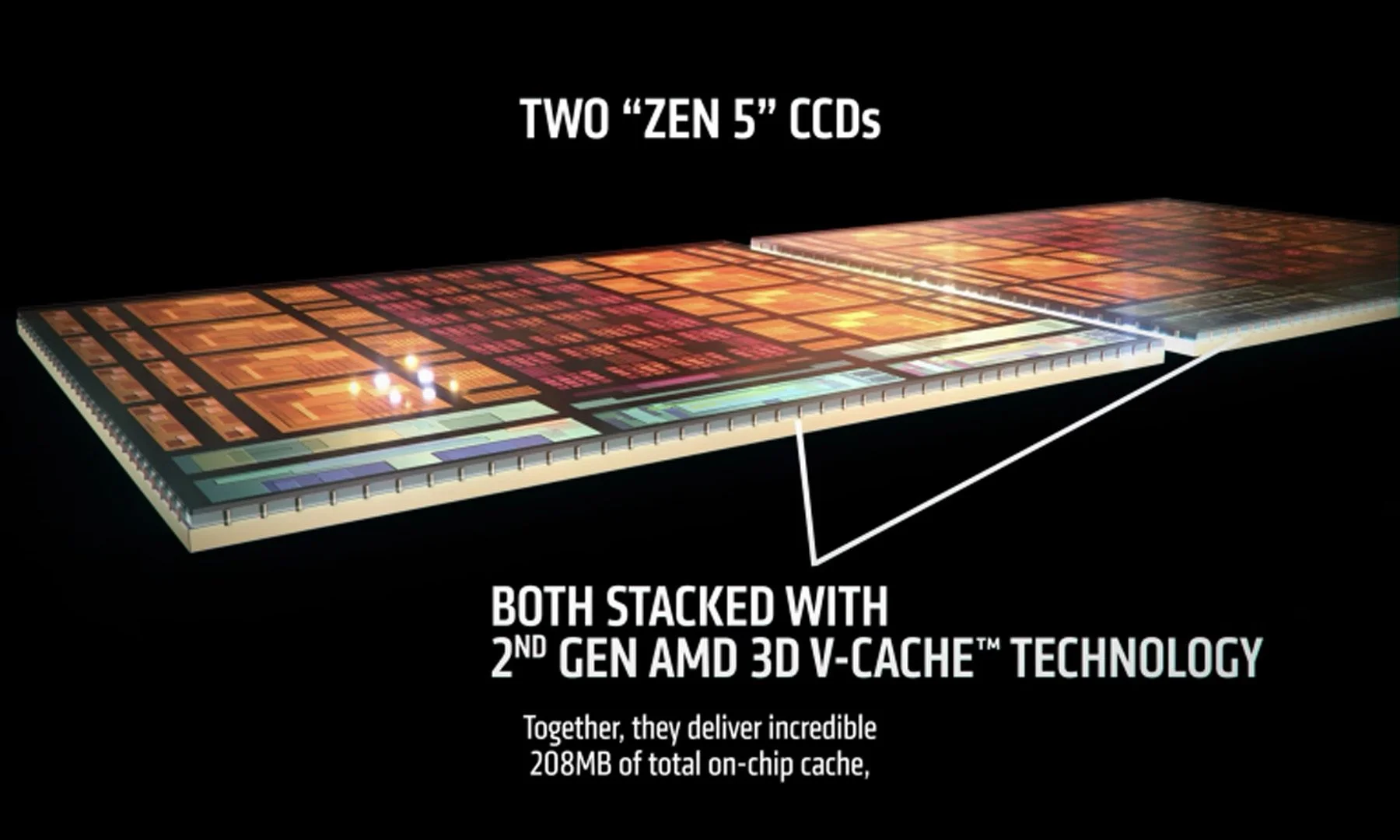
The 9950X3D2 adopts a symmetric dual-stack approach, equipping both chiplets with 3D V-Cache. This doubles the available L3 cache to approximately 192MB, contributing to the 208MB total cache figure. The architectural trade-off manifests in thermal design power, which climbs to 200W—marking this as one of AMD's most power-intensive desktop offerings to date.
The performance implications of expanded cache hierarchy
Cache serves as a critical performance multiplier by minimizing memory access latency. Expanded L3 cache allows the processor to retain more frequently accessed data on-die, reducing round-trip times to system memory. This proves particularly advantageous in gaming workloads, where frame-time consistency and CPU-bound scenarios—such as competitive esports titles and expansive open-world environments—benefit substantially from reduced memory latency.
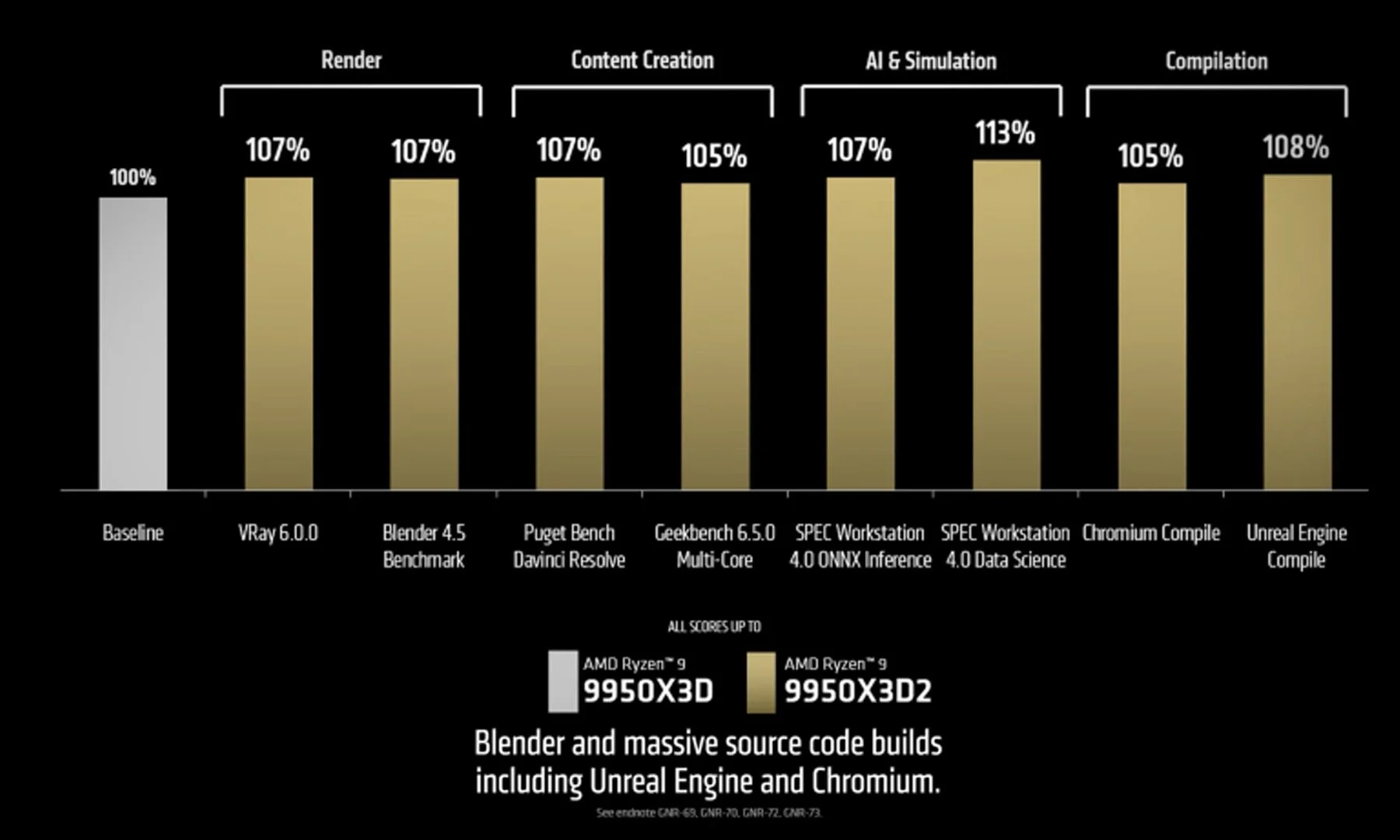
However, cache scaling exhibits diminishing returns beyond certain thresholds, with workload characteristics determining actual performance uplift. The 9950X3D2 targets a specific segment: enthusiast builders, performance-focused gamers, and users prioritizing absolute performance over power efficiency or cost considerations. Its elevated TDP and specialized positioning suggest this is a halo product—a technological showcase demonstrating capability rather than addressing mainstream requirements.
Strategically, this processor represents AMD exploring the upper limits of X3D technology within the Zen 5 generation. Rather than serving as a direct replacement for existing SKUs, it functions as an experimental platform testing how far cache-centric optimization can extend before the Zen 6 architecture arrives. AMD has not disclosed pricing details, though the processor is scheduled for availability on April 22nd. The launch underscores AMD's continued commitment to cache as a key differentiator in gaming-focused processor design.