A year ago, Aura introduced the Aura Ink, the first ePaper photo frame; this device, while not as vibrant as a traditional digital photo frame, had the advantage of letting you hang it on a wall — no power cord required — for up to three months at a time without needing to be recharged.
The company is back with the Aura Ink 10, the first in the second generation of ePaper style photo frames. This frame can show more colors, and at $349, is also less expensive, albeit still well above some of the best digital photo frames. So, is the premium worth it?
Price and Design
The Aura Ink 10 went on sale on November 10, 2026, for $349 at Aura's website. It’s offered in just one size, and with just one matte color (black). The original only came with a white matte; I wish the company offered both options.
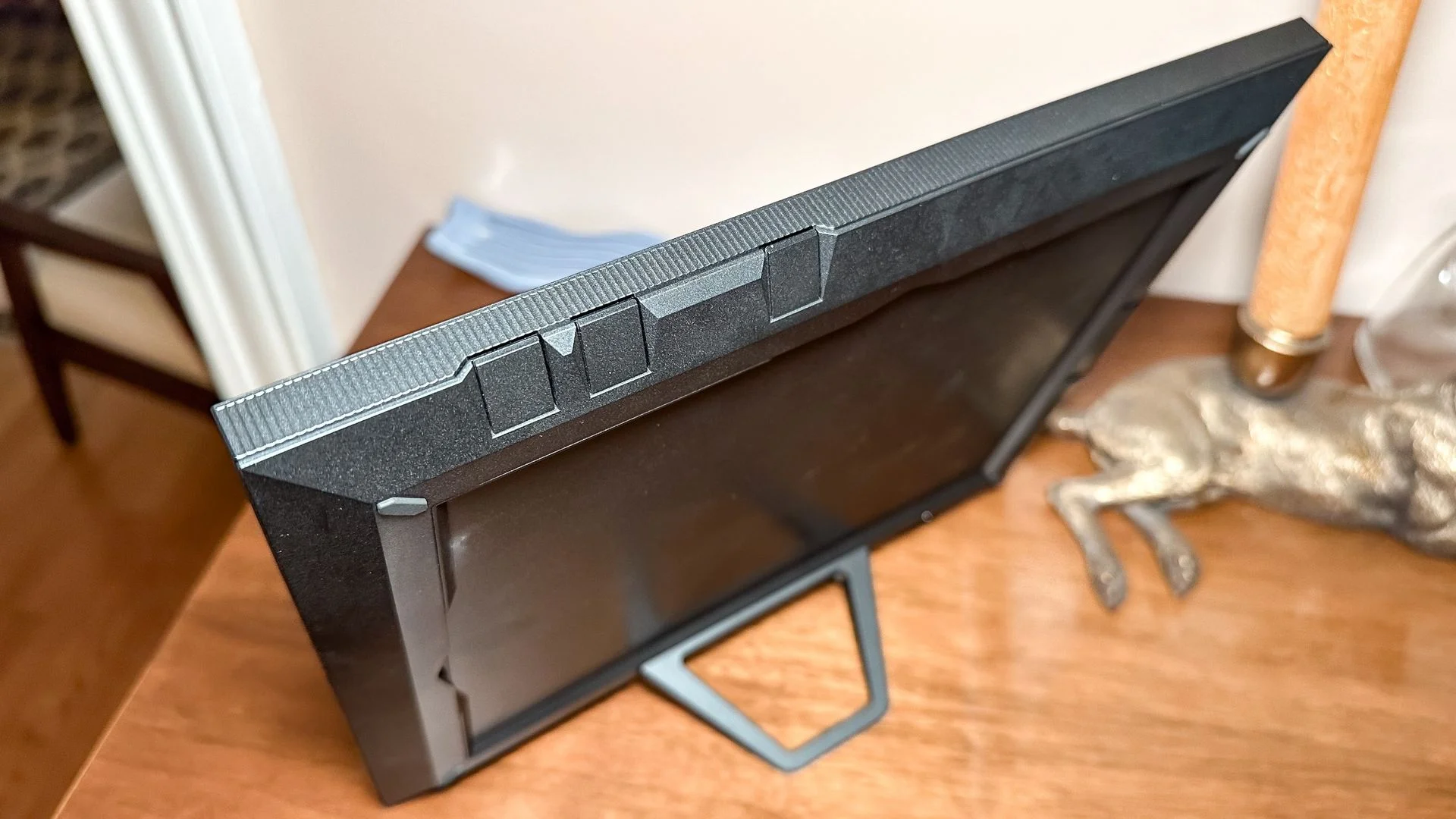
The frame itself is very thin, at a little less than an inch, and comes with both a stand for placing it on a table, as well as pins so you can mount it on a wall. Three buttons sit inconspicuously on the back edge of the frame, and let you switch photos and get the frame ready to go. Overall, it’s a very subtle design, and it’s unlikely that anyone would recognize it as a digital frame at a glance.
Display
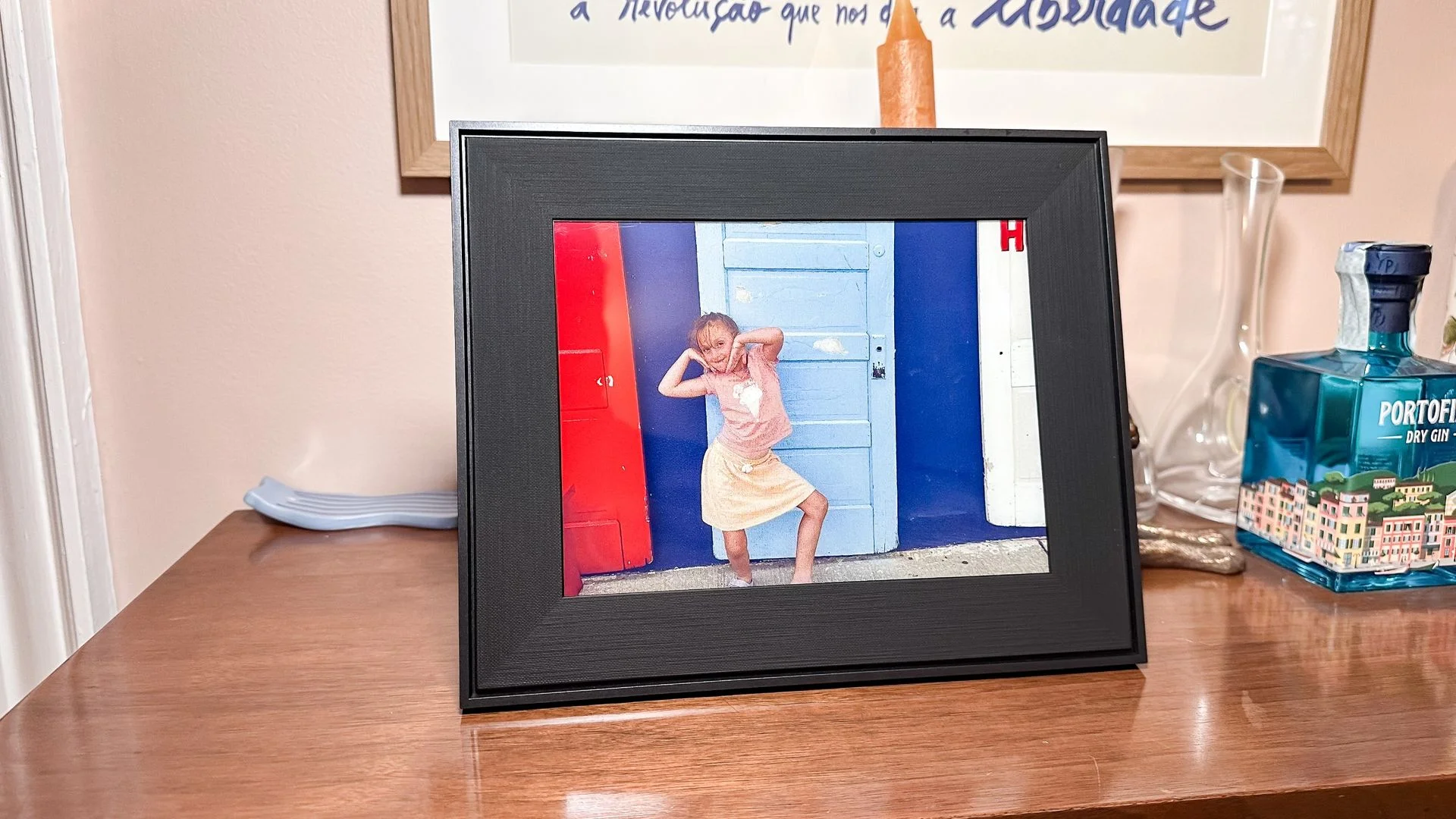
The Aura Ink 10 uses an E Ink Spectra 6 display, which can produce nine colors (black, white, red, yellow, blue, green, off-white, mustard yellow and orange), up from six on the original Aura Ink. That means it can show more nuances in pictures, though don’t expect true-to-life fidelity that you would get from a traditional LCD picture frame. The 10-inch frame also has the same resolution as the 13-inch model, which means greater pixel density.
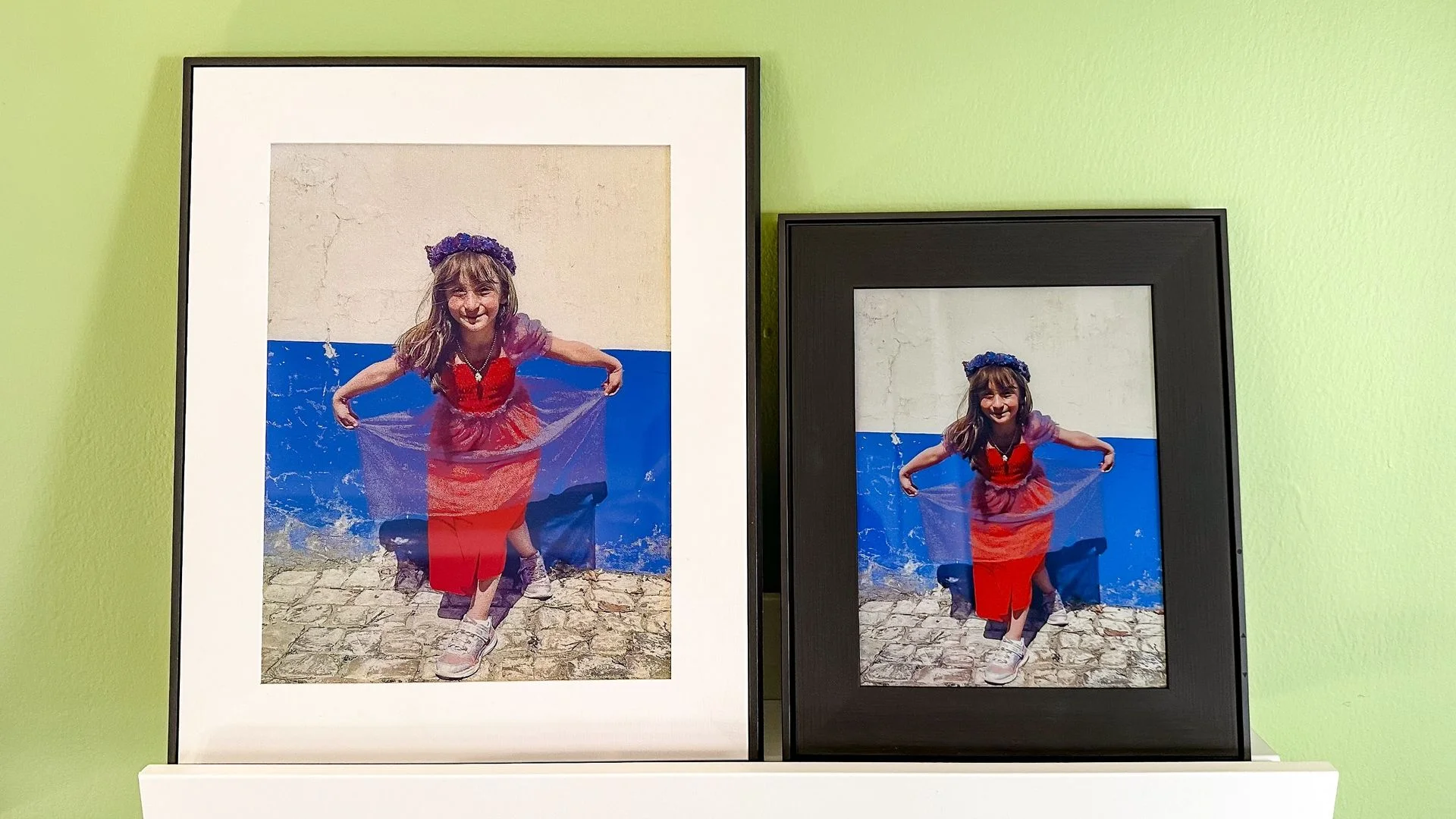
To see the difference in Aura Ink generations, I placed the 10-inch Ink next to the 13-inch Ink, and then displayed the same photos on each.
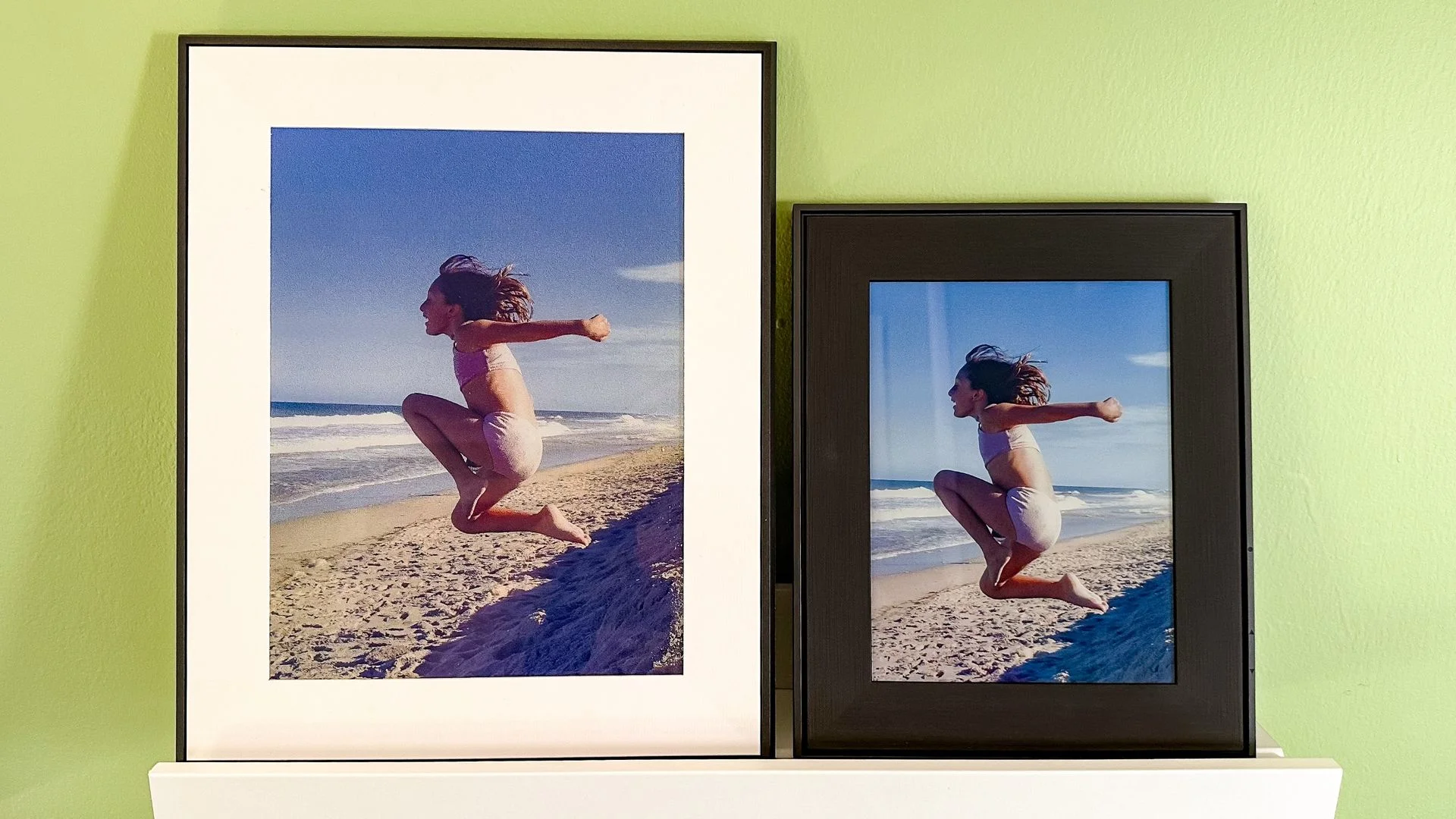
The 10 inch model tended to show photos a little darker, but with better transitions between light and dark areas. For example, in an image of a girl jumping off a sand dune, there was less obvious pixelation from the sun-drenched stretches of the beach to shaded areas.
In another photo of a girl in front of a blue and white wall, the blues of the wall were a bit deeper, but shadows were more pronounced, making it more difficult to make out features in her face and neck area.
The Aura Ink 10 has very gentle lighting that only turns on if it senses someone in front of the frame. Again, it’s not something you’d notice unless you see it turn on, but it helps bring a little more vibrancy to the photo.
Aura says the Ink 10 will last up to three months on a charge, assuming it changes photos just once per day. Once it runs low, you simply have to plug it into a USB-C for a little bit.
Aura also updated the manner in which the frame refreshes; on the original model, the screen kind of flashes randomly as the photo changes. On the Ink 10, there’s a wave-like pattern that starts in one corner, and ripples across the screen. It’s more intentional, and doesn’t make it look like the frame is shorting out.
Adding and sharing photos
One thing that Aura does well is make it easy to add photos to its devices. For starters, you can sync your iCloud or Google Photos albums in the Aura app. And, to help narrow things down, the Aura app can filter photos by person, so that you can more easily find photos of particular individuals; unfortunately, there’s no pet filter. If you want to skip the app entirely, you can also either email or text photos to the display. Handy!
Bottom line
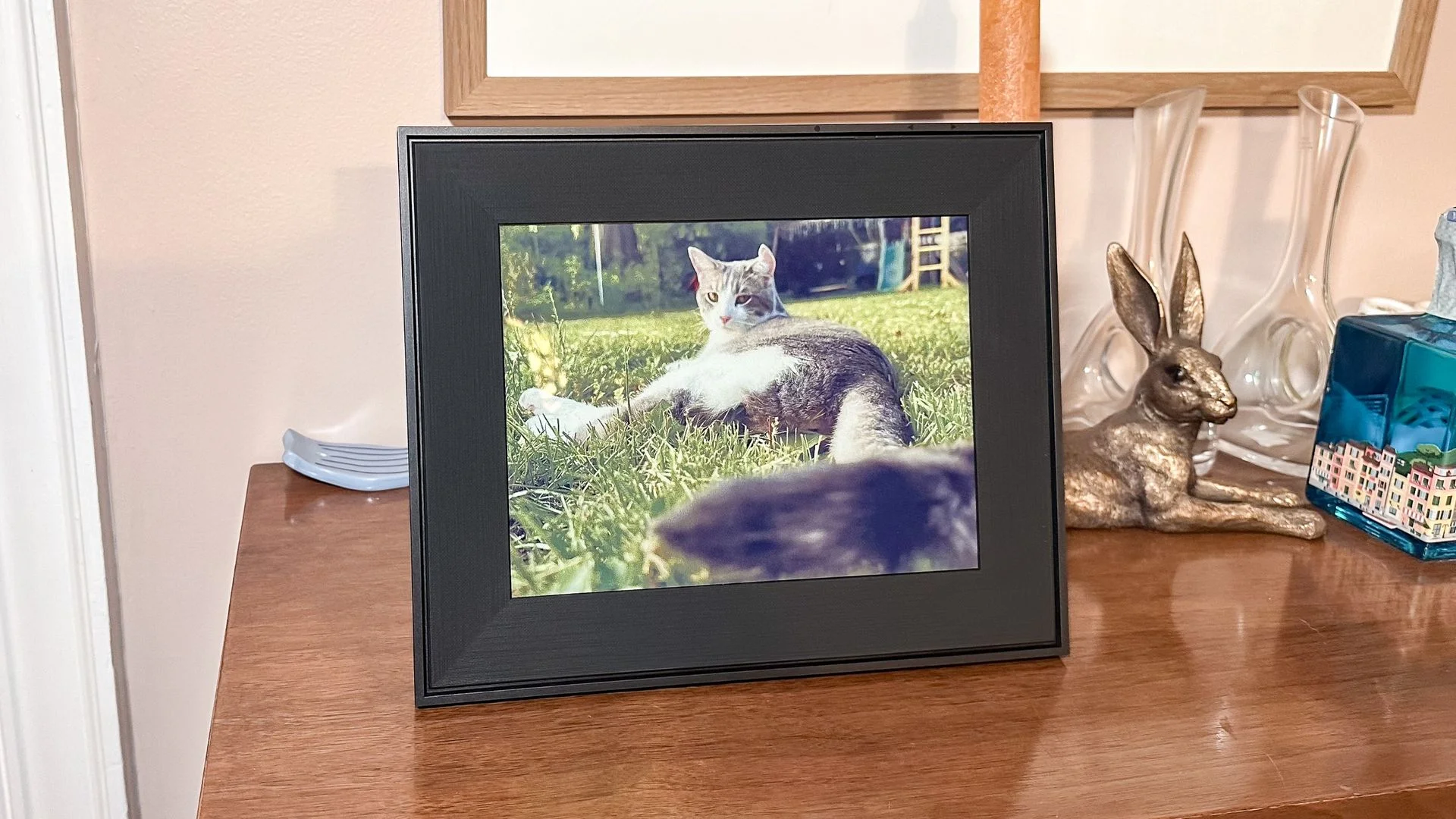
As someone who tests smart home devices for a living, I suspect my house, which has smart displays everywhere, is a bit different than most. So while I appreciate traditional digital photo frames — the Alexa Photo Frame is one of my favorites, for its innovative use of AI — it’s nice to have some tech that doesn’t look like tech.
Yes, there are some tradeoffs to an ePaper photo display like the Aura Ink 10. You’re not going to get colors that really fly off the screen, and you’re going to pay a premium over other photo frames. But, in a digital-everything world, I appreciate its subtleness.